Friday, 29 April 2016

What's Wrong With Adultery?


No matter what your opinion on the subject is it's now widely accepted that cheating in relationships is a part of our society. A survey of 635,000 UK individuals found that 25.4% of men and 18.3% of women have cheated on their partners at least once. Over the pond in America a presidential candidate noted for having multiple wives is getting record approval rates, so to say that polygamy doesn't have a place in modern society would be ill informed. This isn't even a new revelation either, as it's accurate to state that adultery has been a part of society for millennia, with many cultures partaking in relationships outside of their marriage. The reasons behind these alarming statistics are subject to fierce debate, and although I could go on and on about philosophical bollocks that tiptoe around the edges of the issue, I will instead be using science and rational thought to carve up this debate instead of just writing down my personal feelings.

It's all very well jumping on the bandwagon and condemning cheaters in a society that demonises them, but to simply state that polygamy should be frowned upon because long lasting relationships lead to happiness is simply in denial of why lovers feel the need to cheat. The ethnographic atlas claims that out of 1,231 societies worldwide only 186 were truly monogamous. Even in Western countries that have a largely monogamous society are heavily influenced by a growing culture of those that have affairs, and the statistics surrounding the popularity of online dating sites is proof that there's a significant portion of people who would rather focus on short term flings. Whilst it's certainly true that marriage is generally thought to lead to happiness in individuals, it would simply be ignorant to dismiss the possibility of happiness in polygamous relationships. Sure, cheating may well be a social faux-pas in Western culture, but when you've had the notion that one person alone is going to make you happy for the rest of your life shoved down your throat continuously then you have to accept that out of the billions of people worldwide there's going to be mistakes, and there's going to be individuals that feel alienated by something that has never made them happy. Is it therefore wrong to start criticising these individuals based on a mistake that's led their unfaithfulness? Maybe, but it's certainly not the grounds to start demonising polygamous relationships.


Wow, if polygamy really does lead to unhappy relationships then there's a lot of unhappy couples in the world.

Another issue that's brought up by this argument is whether the value of marriage would be depleted. However my response to this point would be to simply state that the value of traditional marriages are already being depleted, which is a trend not shared with polygamous relationships. The number of marriages in the UK has almost halved since 1971, where as in America, a country famed for its stance on polygamy, the approval rating for polygamous marriages has risen to record highs. I'm sure you could try and counter this with some pseudo-scientific bollocks about the role of emotional investment in marriage, but the statistics don't lie, and actually there isn't any evidence to suggest that polygamous marriages are making people unhappy. Surely you could also say that if you continue to broaden the parameters surrounding marriage, subsequently decreasing its value, then homosexuals shouldn't be allowed to marry either.

Instead of relying on morals or philosophy to answer this question we should instead focus on the actual science behind cheating. Polygamy is a very common phenomenon in nature, and in fact there really isn't many species that humans can identify as truly monogamous. There's almost always cases of postcopulatory competition in nature, and even humans themselves didn't form monogamous relationships until around 18,000 years ago. Science can conclusively say that the more partners an individual has the more ability the organism has to pass on its genes, so it's of no surprise that in a world full of selection pressures that this method of sexual reproduction is common in nature. What cannot be explained however is why this happens, but there have been studies of many different species that try and provide an explanation. Bonobos are a species of great ape that happen to be one of humanities closest relatives and aside from that they're also known for their rather hands on approach to their sexual relations with each other, and so provide a good comparison between polygamous and monogamous relationships within nature. Recent evidence suggests that this behaviour is to ease social tension. Now obviously I'm not going to state that human and bonobo societies are the same, and in reality human relationships are by far the most complex in the animal kingdom, but what I am trying to prove is that polygamy does have a valuable role in natural relationships, explaining why this behaviour is still seen in humans, even if the cause isn't directly related to the relationships themselves.

Instead maybe we should be approaching this argument from a different perspective. Maybe we should be asking ourselves if human copulation is benefited by monogamous relationships in a way that bypasses the advantages found in nature. There's certainly a lot of evidence out there suggesting why it's favorable for humans to form solitary pairs, and although the details aren't conclusive there have been studies suggesting that monogamy leads to a shift in female preferences that favor sexual success within human males. Other studies have found that monogamous relationships lead to the greater care for offspring, which may go on to propose why monogamy is accepted in societies where parenthood is less dependent on the amount of resources, and actually derives from social reasons. This is a tenuous point to make, but when reviewing all the evidence on the whole it then becomes apparent there's certainly nothing wrong with polygamy from an evolutionary perspective, but monogamy does appear to be advantageous in human societies, benefiting societies that aren't seeking to minimise gestation periods.

Polygamy is such a common behaviour in nature, so saying it's not natural would be idiotic.

As a man I'm statistically more likely to believe that polygamous relationships are natural in human beings, and indeed I do. If like myself you do believe that every action a human makes is inherently selfish then it becomes instantly clear why adultery is commonplace in our society. The articles I've seen condemning polygamous relationships read out like a problem page in a women's magazine, speaking from personal and often bigoted perspectives that fail to see the general argument from a whole perspective. There's no doubt that polygamous relationships are part of nature, and that may suggest why they're still accepted in many cultures worldwide. It's also understandable why many cultures value monogamy, as there's certainly many proven advantages of monogamous relationships, but when looking at the evidence worldwide it becomes apparent that frowning on cheating is really a snobbish attitude from the Western World, looking down from their ivory towers at the uncivilised ways of people who they class as inferior. As a person I would never even consider cheating and have great respect for those that value monogamy, but in reality there is no evidence to suggest that polygamous relationships are inherently wrong, and should therefore be tolerated by our often ignorant society.


Monday, 25 April 2016

Should We Shut Down All Zoos?

With the growing amount of controversy surrounding keeping animals in captivity I thought I would provide my viewpoint on the common arguments that surround this debate. As a reference point I will be referring to a 2015 Vice article that aimed to sum up why all zoos should be shut down and try to defend what is now a growing concern in the public eye.
_______________________________________________________________________________
http://www.vice.com/en_uk/read/why-we-should-close-all-zoos-778?utm_source=vicetwitteruk
_______________________________________________________________________________
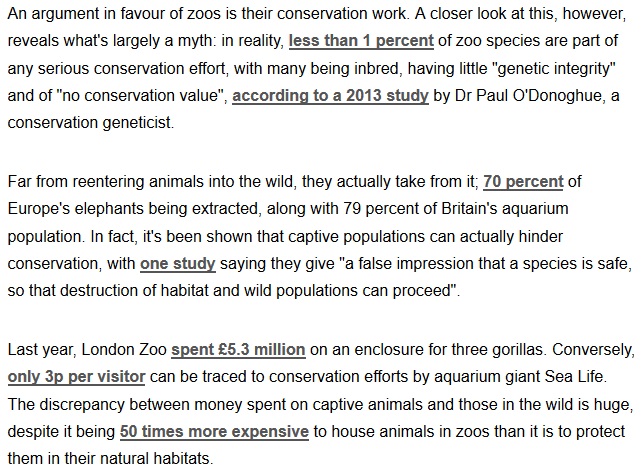
My first impression of this argument is that the author likes to pick out isolated pieces of data that conform to his view on zoos. The opening point here is simply ignoring the general trend that the majority of animals have a higher life expectancy in captivity than they would do in the wild, because as you quite rightly state there are less abiotic and biotic factors affecting organisms in a carefully monitored environment. The only counter evidence you have for this is that infant mortality rates are higher in zoos, which is in complete dismissal of population trends for an individual species. Of course the infant mortality rates are going to be high, you can't just include raw statistics without any synthesis of the information. Do you know if that figure has changed over time? Is this at least correlated with the increased care and facilities provided at zoos over recent years? I'm not saying that more lion cubs dieing in zoos is a good thing, I'm just questioning whether there's concrete evidence that this is a problem with zoological parks in general.

Another thing I hate is this obsession that the wild is the epitome of freedom and wellbeing for any animal. Is it really? As a zoology student I've seen some grizzly things happening in the wild that simply wouldn't happen to an animal that's being given around the clock care and catered for its every whim. Maybe I would pay more attention to this argument if the data was actually sourced from somewhere reliable, and not a website named the 'Captive Animals Protection Society'. Yeah I'm sure they're going to give a balanced picture of zoos and not at all cherry pick information to fit their one dimensional narrative. Even then the studies they source paint a vastly different picture to what you claim. Take the study that compared animal space in captivity and compare that to their wild range. That study contains conclusions such as this: "We know the zoos can't give them as much room as they need, but they could give them more dens, more viewpoints and generally make their environment more interesting." But no, this is certainly the fault of zoos as a concept, and certainly not an issue that can be improved over time.

Well yes of course there are going to be zoos that don't operate with animal welfare in mind. As much as I love zoos I'm not going to stand around and condone some of the conditions animals are left in, and I do agree that zoological parks do need to be regulated to a higher level, but these examples are just taken from a very biased perspective and don't accurately represent the majority of zoos. This article never gives a general consensus as to the operations of zoos that thankfully in Western countries are staffed by carers who do truly give a shit about the animals under their management. Take your sources for example; The 2010 report from Woburn contained the lines "The park admits that its current enclosures are inadequate and that larger, more modern pens are being built." And as for the 2011 report from Knowsley, well it shouldn't be that shocking considering culling is a necessary practice to businesses centered around animals. You find similar situations in places such as dog shelters, just at a far higher rate. In all honesty zoos can't win in this situation. Either they're blasted for keeping an excess of animals and subsequently critcised for welfare, or forced to cull the animals to again be criticised for welfare. The last two sources just reveal that there are standards in place regarding what organisations can keep animals, so you have to ask yourself whether zoos are really as badly managed as you make them out to be.

Is conservation programmes in zoos really a myth? How about species such as the California Condor, Scimitar Horned Oryx, Arabian Oryx, Round Island Boa, Black Footed Ferrets, Pink Pigeon, Golden Lion Tamarin, Sumatran Tigers, Amur Leopards, Tasmanian Devils, Tuataras or even the Przewalski's Wild Horse? All these species have got a captive population crucial to their survival; and that's just the tip of the iceberg. Even if the animals aren't directly being used for conservation, which admittedly not many are, they can still be used as an ambassador for conservation in the wild, or even just serving to strengthen or reinforce the gene pool.

Your source for the 'less than 1%' figure comes from a man named Tim Zimmerman, who for the record was the associate producer and co writer for a documentary called 'Blackfish', which is essentially a smear campaign for zoos that was found to have purposely fabricated interviews. So yeah, real reliable sources being used here. The other source, which is a singular study, is also taken out of context. The word preceding your quote in the study is 'can', which is very fucking different to the word 'does', and therefore its use in this article is very misleading. The source does go onto explain that conservation in zoos should be used as a 'last resort', but also states that "we strongly support the effort of zoos to establish recovery captive populations in appropriate facilities in countries of origin of endangered species when such programmes are advisable." To be honest you should read the fucking conclusion next time because in reality this is a source that ultimately supports the existence of zoos, essentially disproving the point you're trying to make.

You then go on to compare the discrepancies for two different organisations that spend money differently. I honestly find this point a little contradictory considering that earlier on you were complaining about the harsh conditions animals live in, but when zoos are finally being proven to be increasing the quality of their enclosures you still complain. Maybe you should ask yourself why people are more inclined to give money to zoos than the apparently much cheaper conservation programmes you've got your heart set on. I just don't get your point here. Are you saying that zoos should cut down on standards in favor of conservation, or are you stating that despite being a business zoos should just fund conservation programmes instead? Either way your solutions are just illogical, relying on raw statistics instead of reasoning to convey. Even if you don't agree with the conservation approach of zoos you still have to cede it's better than nothing. Having a reserve genetic pool is invaluable in the long run when you're facing the mass extinction we're in now, yet at no point is this even referenced in relation to conservation. It's such a narrow minded view to take, and shows a clear gap in knowledge.


'What can a person possibly learn from zoos?' Well okay they might not become the next David Attenborough from a single visit, but at least they might get the invaluable experience of seeing a rare and valuable wild animal in person without having to fork out thousands of pounds on the off chance they might see one abroad. This is a personal argument for me because I know there is no way I would be pursuing a career in zoology if it wasn't for my local zoo. Sure I had the documentaries and books that you claim will work anyway, but I can say 'bollocks' to that, because as any scientist will tell you it's fieldwork and practical work that leads to inspiration, not sitting in a lab all day. Let me ask you this: Is it the first hand experiences that cause PTSD in soldiers or is it them watching documentaries on the conflict without taking part? I know that's an entirely different argument, but the point I'm trying to make is that first hand experiences are far more valuable than being idly lectured on something you've never witnessed. According to you however this isn't the case, and that's all based on one study of one business chain from a source that's the same biased site used for earlier arguments; and even then the statistic itself isn't even that significant. I honestly hope you never become a recruiter for the army, because under your logic people like me should be allowed prestigious roles as we've learnt everything about warfare by playing 'Call of Duty'.

The thing that irritates me about this article is that because of a few examples taken out of context zoos are instantly demonised without any objective thought. This article never explains why the majority of zoos that do have a positive impact on animal welfare should be abandoned because of the failings of a minority. By that logic surely humanity should abandon capitalism or mass transportation considering that there are clear examples proving that these systems fail despite the fact that these statistics are in the minority. The conclusion to this article is hardly surprising. It's such a fallacious statement that shows a clear lack of understanding on the topic. How can you honestly sit there and state that zoos are a primary cause of environmental degradation when you've provided no evidence of this in your article? I just hate this notion that zoos solely exist to harm animals. Yes zoos are primarily a business that have to rely on revenues from species deemed attractive, but this isn't the nineteenth century, and so attitudes have drastically changed from your rather imbecilic view on proceedings. So no, argument does nothing to persuade me that zoos need to be shut down. I don't think it's the concept of zoos at fault here, rather this person's ignorant attitude.


Thursday, 21 April 2016

Top 10 Overhyped Games

I for one loved to get hyped about the upcoming releases in gaming. Some games do actually end up producing the goods in the end and delivering on that hype, but then there's the vast majority that don't. The games on this list were so overhyped that gamers found themselves with a bitter taste in their mouth after the product they were promised just failed to deliver. These are the worst of that bunch.

#10 Homefront (2011) (6/10)

The idea of America being invaded by North Korea was one that got me sexually excited. That's such a good idea for a storyline that I hope future games do justice because this release wasn't what I expected. All the developers had to do was create a plausible story that engaged the player and then mix this in with some good combat mechanics, but no, they couldn't manage either of those. The game looked and felt like a low budget turd, and the campaign was short and didn't tell a good enough story considering all the effort spent to promote this underwhelming product. Aside from a few moments added for shock value this was an uninspired mess that just ruined the potential of such a good idea.

I will admit to enjoying the multiplayer, but buying this game for the multiplayer experience is sort of missing the selling point. In any case 'Call of Duty' and other similar shooters are much better to play, so there was absolutely no reason for anyone to buy this. The final sales were less than stellar despite the huge marketing for the game. In a single year 'Homefront' shipped 2.6 million units, which is half of what rival 'Black Ops' shifted in just 24 hours. Despite this commercial failure there is a sequel arriving later this year, but not surprisingly that's not had the immense coverage that this promising title once had; funny that.


#9 Medal of Honor (2010) (5/10)

This was a game released at the time when 'Medal of Honor' was going to quite literally shoot back into the public eye and directly compete with modern shooters that at one time had been inferior to this long running franchise. However this was not the reboot gamers had in mind, and the awaited huge changes to the franchise weren't exactly met with enthusiasm. Nobody really wanted an ultra realistic campaign set in Afghanistan, and in all honesty the results were quite fucking boring. The previous twelve 'Medal of Honor' games were set in World War 2, and so in a similar way to how the original 'Modern Warfare' revolutionised the genre 'Dice' decided they too would follow suite. That didn't work, and comparing the two products is embarrassing.

The problem is that 'Modern Warfare' had an amazing campaign and genre defining multiplayer, which this far more recent 'Medal of Honor' game didn't. The features that were included in the game bombed in comparison to the competition, and so not surprisingly 'Medal of Honor' is now a buried franchise in the very large graveyard of first person shooters. In reality the game was a commercial success, but when you release a game like this that tries to follow the trend of many other shooters it becomes hard to compare it to anything else, and that's the same problem that many fellow gamers had, not surprisingly preferring the competition substantially. However DICE didn't learn, and they actually released a sequel, 'Warfighter', 2 years later. 'Warfighter' wasn't very good either, and needless to say 'Medal of Honor' hasn't been back since.


#8 Watch Dogs (2014) (7/10)

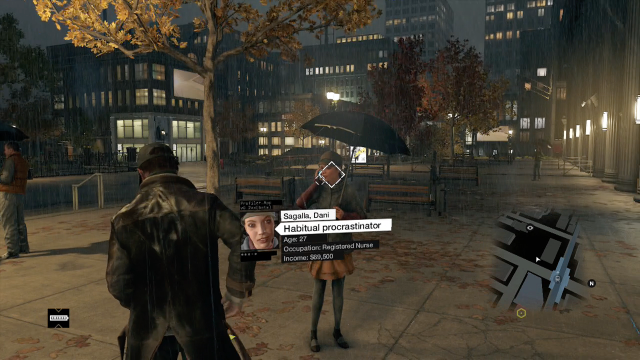
When 'Watch Dogs' was first revealed out of nowhere, to say I was just a little bit excited would be the understatement of the century. The trailers and gameplay looked unbelievably good, and I was convinced that this would be one of the best games of this generation. The reveal was so good that 'Watch Dogs' won 90 awards for the E3 presentation, but that declined to one after the actual release; an award for the most disappointing game of the year. The problem was that despite a brilliant premise this game was executed to a standard far less than what everybody was expecting. Don't get me wrong I still enjoyed my time with this game, and there were some great features that supported the originality of the design, but there was still that overbearing feeling of disappointment over everything this game promised. The hacking features may have been great fun to play around with, but in reality the features highlighted as unique aren't anywhere near to being genre defining.

The real heartbreak with this one is that what was once promised to being an innovative game was reduced to the status of just another big budget RPG. Ubisoft even tried bribing reviewers and lying about the graphical capabilities to give this better reviews than it deserved, and to an extent that worked. At ten million sales 'Watch Dogs' certainly wasn't a commercial failure, and was actually one of the most successful games of the year. But in my opinion it's such a shame that this ended up being a rather average RPG with just elementary mistakes being made. The plot was really dry and poorly paced and the characters were the poor showing that Ubisoft gives us now. The setting was about the most lifeless I've ever experienced in a title of this magnitude, and the game ran about as smoothly as falling down a flight of stairs. This just shouldn't be happening in such a well funded project, and so it comes as no surprise that many gamers were left disappointed with a title that once showed so much promise.


#7 Haze (2008) (4/10)

This mess was meant to be the next 'Halo'. Yeah, fuck that. 'Halo' manages to combine a good story mode and sublime multiplayer options, but this had neither of those things. The narrative was dull and pointless, not gripping at all and lasted ten seconds, and the multiplayer wasn't much better. The whole game centered around a war on drugs that makes soldiers fight fearlessly despite the drug having hallucinogenic effects. Not exactly a Halo synopsis is it? Aside from the story the mechanics were just plain awful and the gameplay was some of the clunkiest I've ever experienced in a shooter.
When you compare this product to 'Halo', which is what the developers themselves did, then it becomes clear what a mess this was. 'Halo' is a game that makes you want more of the action, where as 'Haze' was doomed to begin with, substituting promise for bland, bland features. Who even remembers this game existed? I'm not sure anyone even bought it, which is a massive fail considering how heavily the thing was marketed. Some Halo killer.


#6 Kinect Star Wars (2012) (2/10)

Kinect and Star Wars. Surely if any combination was going to get gamers to love the Kinect system for gaming it was this one; at least that's what gamers such as myself stupidly told themselves when this title was first announced. The result of hugely predictable hype was not just a bad Kinect game, but also quite possibly the most disappointing title of all time. In retrospect the concept of really becoming a Jedi in your own living room was too good to be true, and not surprisingly gameplay was clunky and mostly non responsive, meaning that Jedi feeling was nowhere to be found. Realising they couldn't deliver on their huge promises the developers decided to expand the experience by putting in other half assed game modes such as the now infamous dance mode. SERIOUSLY, WHAT THE FUCK WERE THEY THINKING? It's a good job this game wasn't popular otherwise the sight of Boba Fett doing a low rent version of the YMCA would have killed this beloved franchise. This game was a farce, not the ultimate Star Wars experience that was once promised.


#5 Spore (2008) (6/10)

'Spore' was a fucking good idea. The developers weren't a million miles away from good execution either, but when you consider just how hyped everyone was for this game it's a bit disappointing to find the results filled with basic gameplay that feels just feels so tedious to play for hours on end. The critics for some reason loved it, probably because they only played through the story mode once, therefore not realising that repeated playthroughs gave a very repetitive experience. The finished product didn't feel like your own planet, and the message of creation just got lost in a half assed strategy and half assed arcade game.

The one element of the game that did live up to the hype was the creation features that thankfully gave gamers a little respite from the extremely linear gameplay that simply followed the same rinse and repeat formula. I did appreciate the ambition, just not the execution. Instead of one big game it became five smaller game modes weakly linked together that don't quite merit an inclusion on their own. This was a game that had the potential to be mentioned in the same breath as legendary creation games like 'SimCity' or 'The Sims', but unfortunately that's never going to be the case. It wouldn't be a bad move for someone else to pick up on this idea though, as this idea does have all the makings of a great game.

#4 Too Human (2008) (4/10)

Oh yes, this is the infamous flop that became one of the most expensive products ever released into the video game market. 80 million dollars were spent to make this pile of shit over a ten year period, spanning three whole consoles as more money was pointlessly wasted on this title stuck in developmental hell. That still didn't stop this game from generating hype, but the only way the game repayed gamers with that amount of suspense was with an anticlimactic product. I suppose this title was a predictable flop, but after ten years you at least expect a game to be built to a higher standard than this garbage.

'Too Human' was a really boring game to play in end, and had countless little nagging errors such as the combat system and storyline that just shouldn't be appearing in a release of this magnitude. The whole premise was centered around a combination of Norse mythology and sci-fi, which in short just didn't work, and as a result the level design suffers. It's hard to convince gamers that their hype was well placed when the premise and combat just don't work, so it's not surprising that 'Too Human' hasn't become a classic over the years. The game was meant to kick-start a trilogy, but after the woeful sales caused by a decade of disappointment the franchise was shelved. Oh dear.


#3 The Elder Scrolls Online (2014) (6/10)

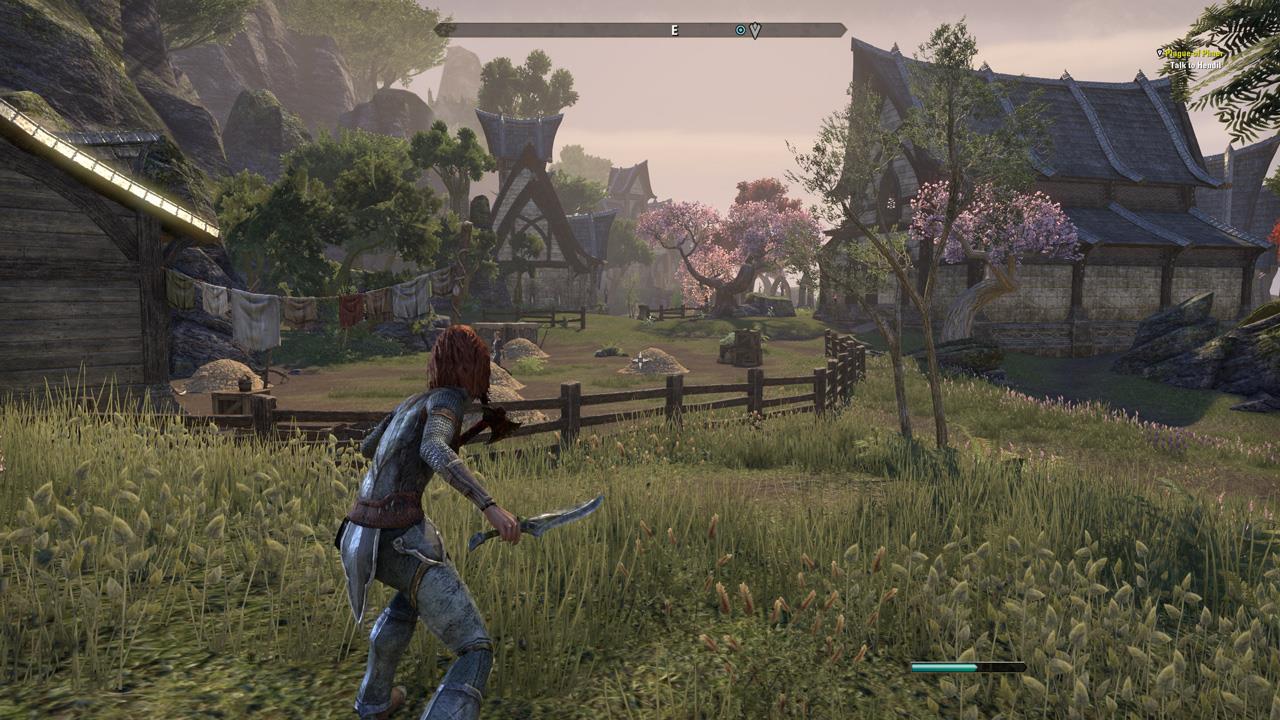
What do you do if you have one of the most loved and respected franchises in gaming? Well you take a huge gamble and try and shift the series into an MMO whilst secretly trying to milk gamers of their hard earned dollar. Not only was the result not even near the quality of previous games in the franchise, but it wasn't a particularly good MMO either. At one point in time the concept of a bad 'Elder Scrolls' game was mindblowing. The name on the cover alone is enough to generate tonnes of hype, which I suppose is why die hard fans were pissed off with the finished product.
 
'The Elder Scrolls Online' took seven years to make, which only generated more hype in a game that in many people's eyes was an ambitious yet exciting direction for a much beloved franchise. Just imagining multiplayer 'Skyrim' is enough for some gamers to happily cream themselves into a heart attack, but I doubt they're doing that now considering how disappointing this product was. This was a game more annoying than anything. In a game franchise that usually makes the player go 'wow' with the incredible content and design this release seemed to have the piss poor attitude of 'that'll do'. That's just not acceptable in a game of this magnitude, and so not surprisingly this title had to rely on reputation alone to get sales. To find out how well that went you just need to do a quick 'Google' search to find out that the game's now been re-branded as 'Tamriel Unlimited', but that's still not enough to save what could have been an amazing game in theory.


#2 Star Wars Battlefront (2015) (7/10)

EA knew we were desperate to get this classic franchise rebooted, but nobody wanted a soulless cash scam that plays no differently to any other generic shooter. I have to say that looking back this disappointing release was an inevitability and was never going to live up to the immense hype generated. We all got too excited at the announcement, but then along came news about all that paid DLC and the restricted gameplay that had nowhere near the freedom of the original games released ten years ago. I just don't understand why EA would purposely put in less content than a ten year old game, but then you remember that EA are cash whores that dance on the grave of legendary games to generate revenue.

This new 'Battlefront' just didn't have that same charm as the originals, and at times it's borderline dull when compared to the originals which were in my opinion the most fun I've ever had in a game. Those games kept the formula simple where as this one tried to become another 'Battlefield' clone, sucking all the life out of the game in the process. The biggest mistake however was giving it the name 'Battlefront'. That's such a burden for a game that could never follow what I perceive to be one of the greatest games of all time. This standalone game however will not go down in history like the originals, and will actually go down as one of gaming's missed opportunities to give such a legendary name the sequel that gamers were craving for.


#1 Destiny (6/10)

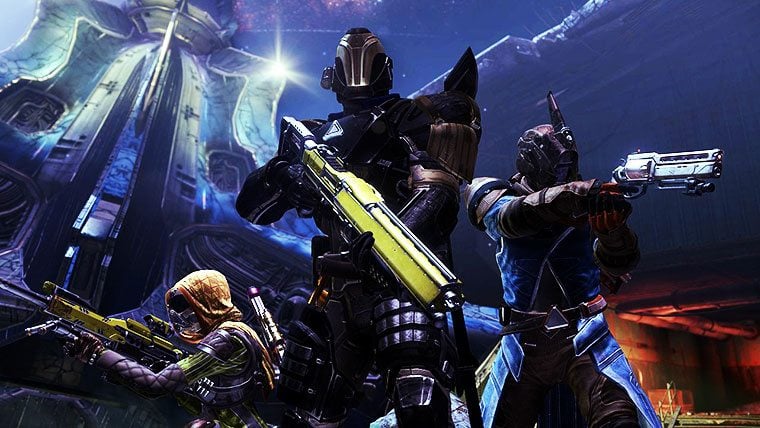
Funny how the top three games on this list have been released recently. Turns out modern video games are all mouth and no trousers. Take 'Destiny' for example, a game bought by the public based on false promises. 'Destiny' however generated so much hype that on release it became the best selling release for a new franchise in history, although that may have had something to do with Bungie banning pre-release reviews of the game which would have revealed a far more accurate picture of this supposed epic MMO. I never thought I would ever say a game that looked as good as 'Destiny' did to begin with would be boring, but how the hell did the creators of 'Halo' manage to fall into that trap with this hugely anticipated release that showed the promise of a great game.

'Destiny' piled up disappointment after disappointment. This wasn't the epic MMO we imagined, and was actually a very restrictive world with such repetitive missions that never told a decent story or at least one you felt was worth the purchase. The only positive was the combat, which was admittedly fantastic, but when you consider that similar huge shooters manage to master far more than that it soon becomes clear why 'Destiny' did not become a fan favorite. The worst part was that this huge project ended up feeling like a grind, and that's just an outrage for such a heavily funded release that was built by some of the best talent in gaming. Yes the expansion packs may have made up for the lackluster launch, but this game will always go down as one of the most disappointing launches in gaming history.